Collecting since 1976
What started with old beer cans became a lifelong fascination with the stories hidden inside ordinary objects. As a kid, my dad and I traveled across the country searching for forgotten treasures in ghost towns, collectors’ homes, conventions, and places most people would drive right past. Along the way, we discovered something important:
Collections aren’t really about objects. They’re about people.
They’re about memories, adventures, passions, and the stories we choose to preserve.
Read more here.
This collection celebrates the colorful world of American pop culture through the everyday objects that have become icons of nostalgia and design. Featuring trading cards, vintage stamps, PEZ dispensers, beer bottle caps, matchbooks, comic stamps, toys, and advertising collectibles, each piece reflects a unique chapter in the story of American life. From comic book characters and movie memorabilia to classic brands and roadside Americana, these artifacts showcase the creativity, humor, and graphic artistry that have shaped generations.
Together they form a vibrant time capsule of popular culture—where ordinary objects become extraordinary reminders of the people, products, and moments that defined their era.
Featured Product
Featured Product
Current Collections
Museum-quality assemblage art now setting sail for new walls!
Our mission is to combine a lifelong journey of collecting with public displays of unique collections that educate and entertain people on the joys and rewards of collecting. Driven by curiosity during world travels, we have amassed numerous unique collections for entertainment and conversation.
While collections are typically sold as-is, we will gladly consider requests for individual pieces.
Whether you have a story to share, a question, or a specific inquiry, we’d love to hear from you!
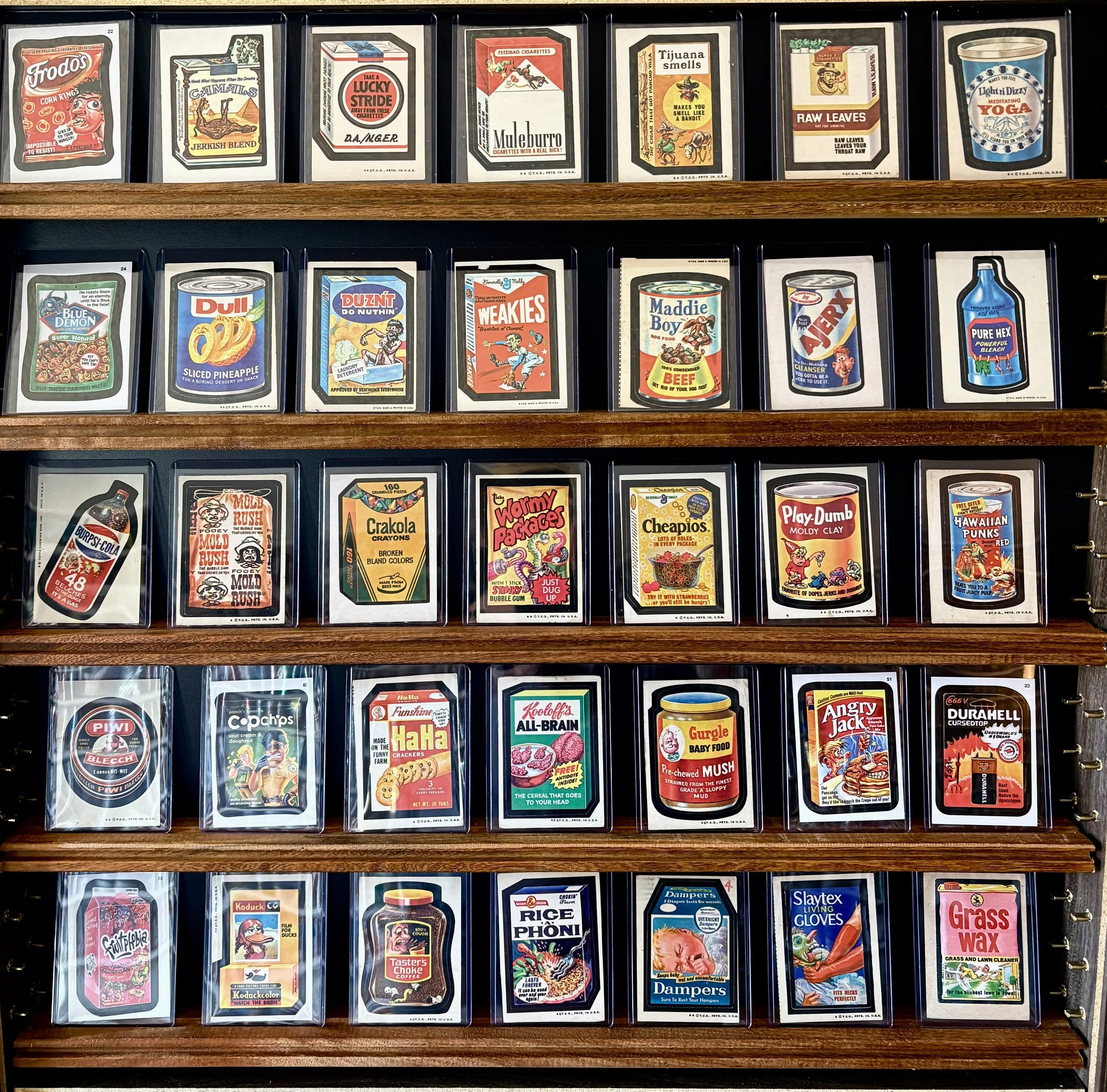
This collection showcases the colorful, quirky, and often hilarious world of Wacky Packages, the parody stickers and trading cards that have delighted collectors since the late 1960s. By spoofing famous consumer brands with clever artwork, outrageous puns, and tongue-in-cheek humor, Wacky Packages became a pop culture phenomenon that captured the imagination of generations of kids. From “Crust” toothpaste to “Gadzooka” bubble gum and countless other satirical creations, these miniature works of art celebrate creativity, nostalgia, and the playful side of American advertising.
Today, they remain some of the most beloved and recognizable collectibles in the hobby world.
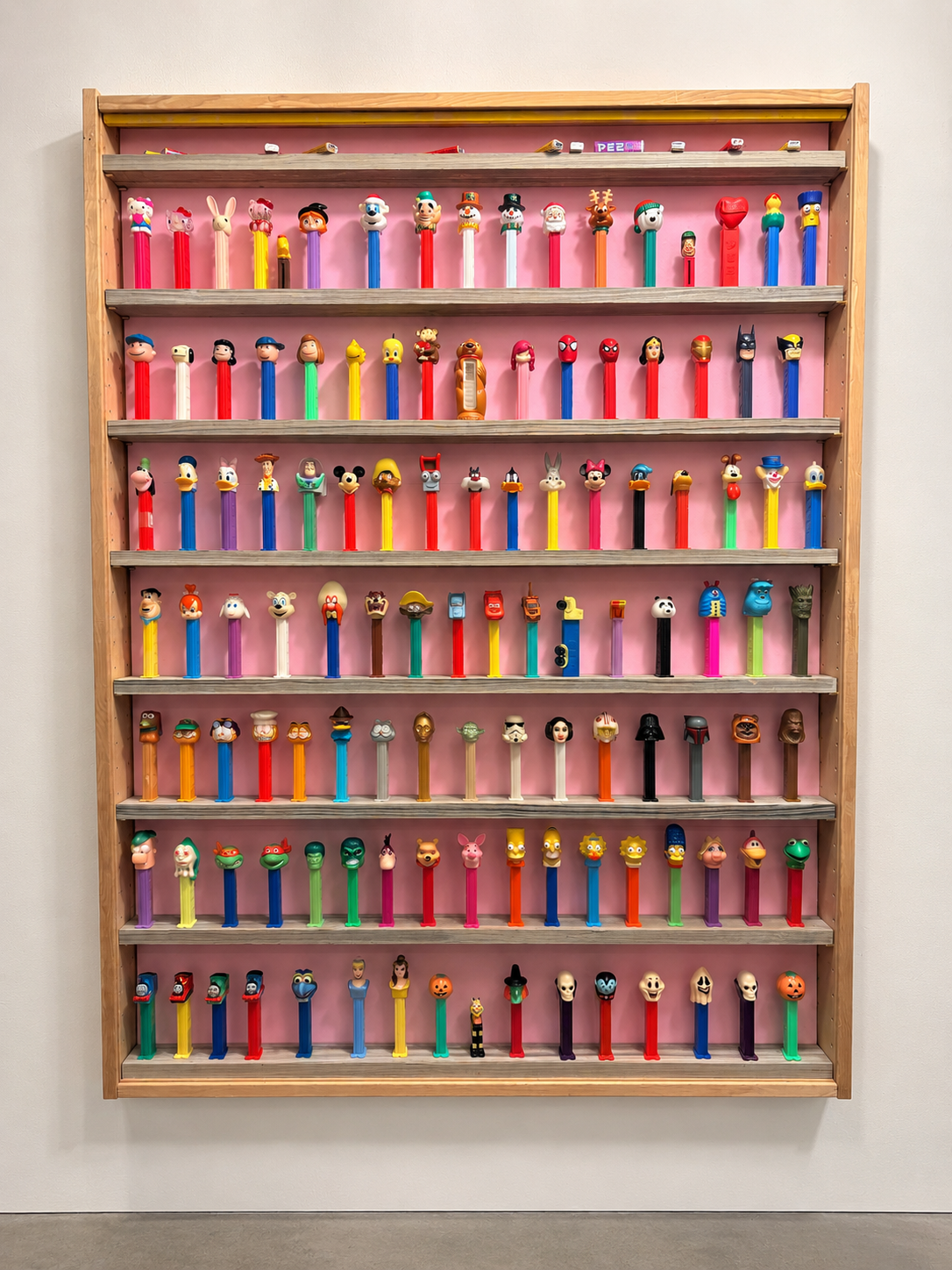
Candy anyone? Over 200 tons of candy are produced every day!
There are over 1500 basic PEZ designs however there are more than 10,000 variations. This is a great example of how you can see why a collection of something can mean many things.
PEZ began in Austria in the 1920s, and it was not originally a children’s candy at all. The name comes from the German word for peppermint, Pfefferminz, and the original product was marketed as a compressed peppermint breath mint and even as an alternative to smoking.
The great transformation came later. In the 1950s, PEZ shifted toward the American children’s market and began putting character heads on the dispensers. That decision turned a simple candy package into one of the most recognizable collectibles in the world.
What makes PEZ fascinating is that the dispenser became a tiny stage for popular culture. Characters that began in comic strips, comic books, cartoons, television, movies, holiday traditions, and advertising were suddenly turned into something a child could hold in one hand and carry in a pocket.
You can trace generations of American entertainment through PEZ: Mickey Mouse, Donald Duck, superheroes, Star Wars characters, Disney princesses, Peanuts, Looney Tunes, holiday figures, monsters, animals, sports characters, and movie franchises. A PEZ collection becomes a miniature history of what children watched, read, and loved.
Candy itself has always been tied to nostalgia. Smell and taste are unusually powerful memory triggers, so a piece of candy can instantly bring someone back to a movie theater, a Halloween bag, a road trip, a corner store, or childhood with friends. PEZ adds another layer because you didn’t just eat it — you played with the package.
Regardless, these stories are also for a small book to go along with the collection if it ever becomes an exhibit.
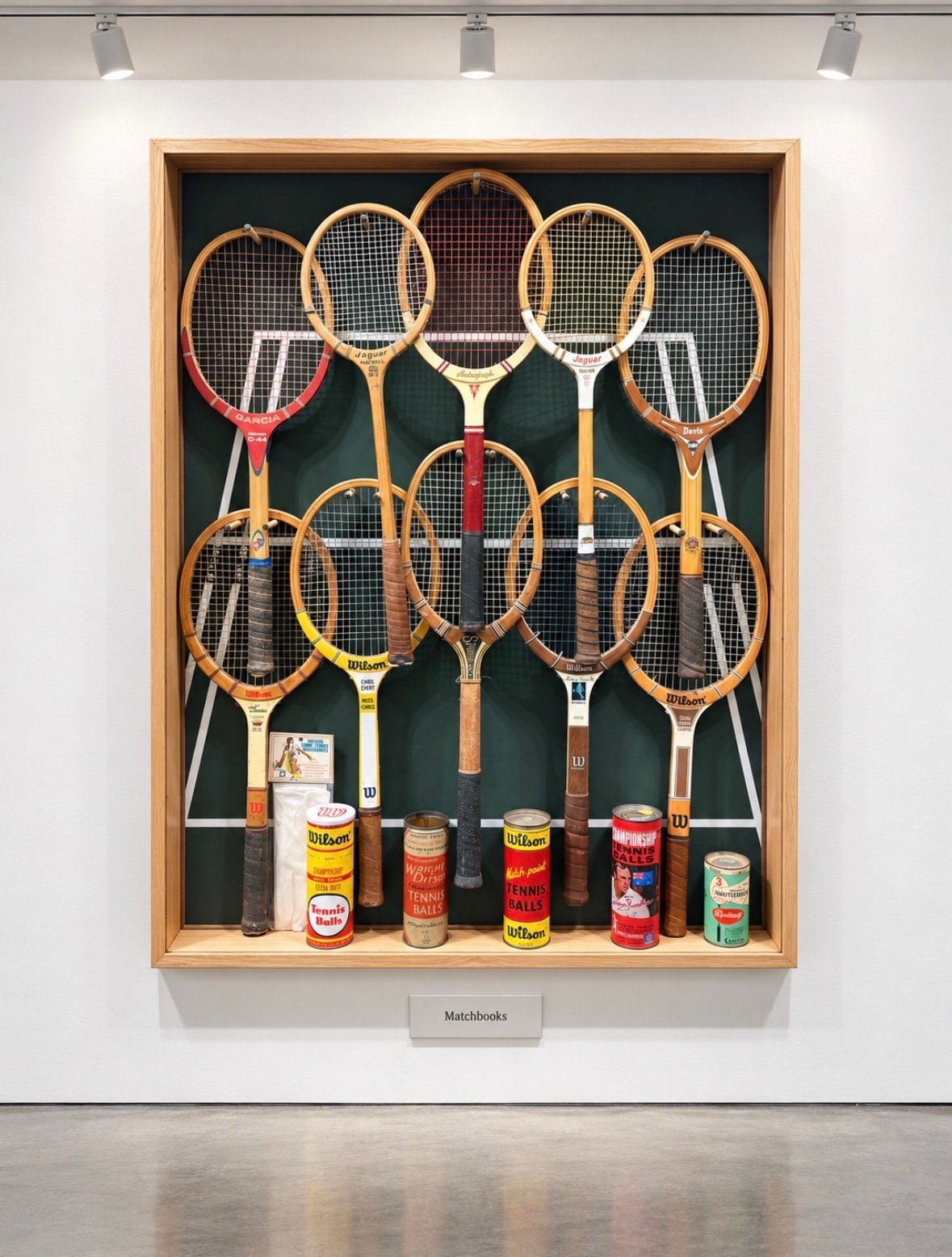
This collection celebrates the rich history and timeless elegance of tennis through a display of vintage wooden racquets and classic tennis balls. Before the age of graphite and composite materials, wooden racquets were the tools of champions, crafted with remarkable skill and distinctive designs. Representing decades of innovation and competition, these racquets evoke the golden era of the sport when legends battled on grass, clay, and hard courts around the world.
Paired with period tennis balls and memorabilia, this collection spanning from Stan Smith to Chris Evert captures the spirit of a game that has inspired generations through athleticism, sportsmanship, and tradition.
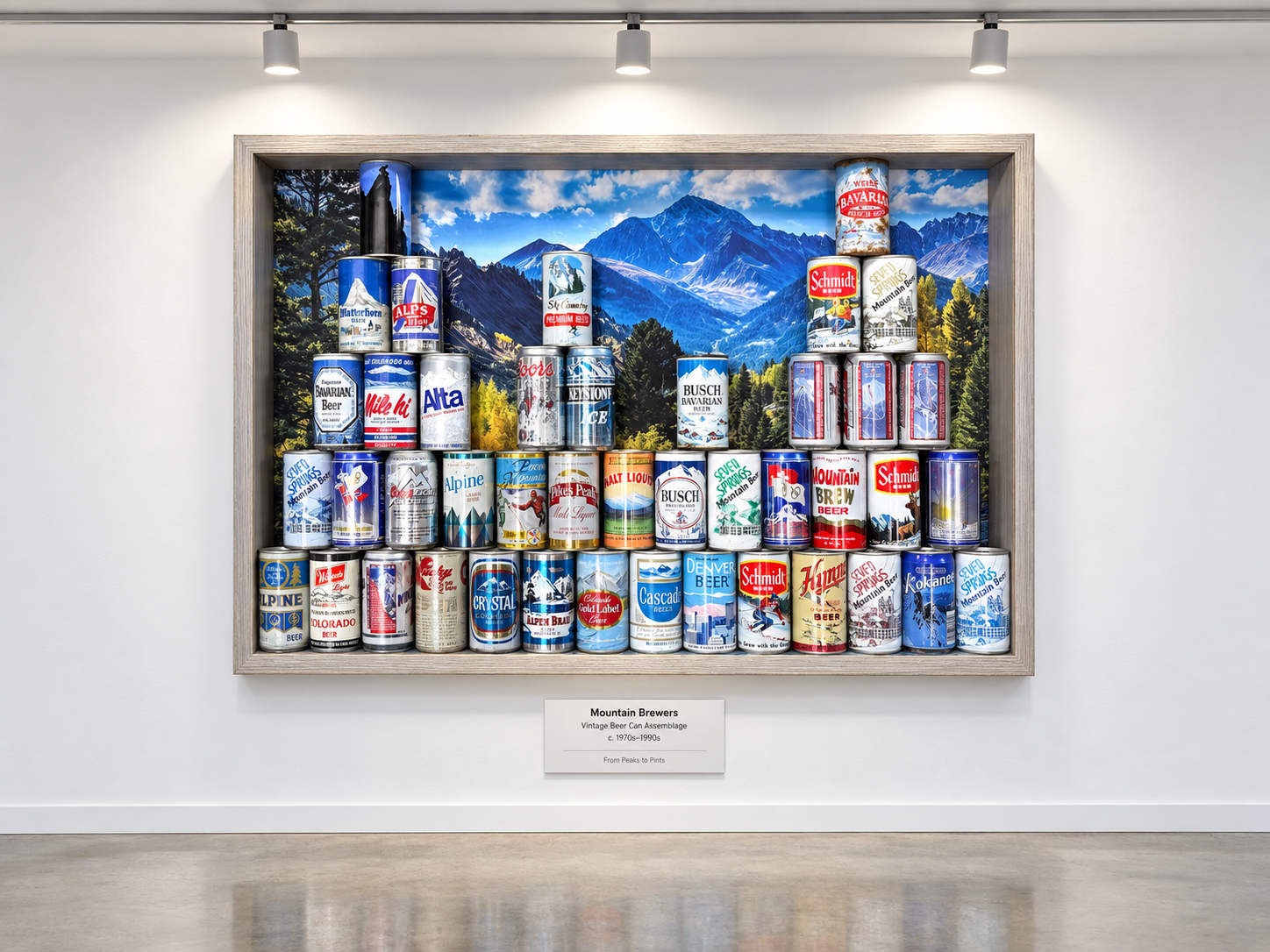
More than 1 billion beverage cans are produced every day. In the US alone, 115 million beer cans are shipped every day.
Beer is one of humanity’s oldest manufactured drinks. Long before cans existed, ancient societies in Mesopotamia and Egypt were already brewing fermented grain beverages thousands of years ago. Beer was food, drink, wages, ritual, and social glue. Centuries later, European brewing traditions — especially German lager brewing — profoundly shaped American beer culture through immigrant communities in places like Milwaukee and St. Louis.
Then came Prohibition. When national Prohibition took hold in 1920, legal brewing in the United States was largely shut down for 13 years. Beer returned legally in 1933, and only two years later came one of the biggest changes in brewing history: the beer can.
On January 24, 1935, Krueger’s Cream Ale and Krueger’s Finest Beer became the first beers commercially sold in cans. The idea was risky, but consumers loved it. Cans were lighter than glass, stacked easily, traveled well, required no bottle deposit, and dramatically changed how beer could be distributed.
Early cans were very different from today’s aluminum containers. They were made from heavy steel and had to be specially coated inside so the beer would not taste metallic. Many early examples required a separate opener — the famous “church key” — to punch holes in the top. Later came cone-top cans, flat tops, pull tabs, and eventually the modern stay-tab aluminum can.
War changed the beer-can story again. During World War II, metal, rubber, food, and other materials were tightly controlled. At the same time, the U.S. military wanted beer available to troops. The government ultimately required brewers to devote part of their production to the armed forces, and American servicemen received lower-alcohol beer overseas. Beer became tied to morale, recreation, and home in the middle of war.
After the war, America entered the age of the giant national brewery. Names such as Pabst, Schlitz, Miller, Coors, and Anheuser-Busch grew enormously, while hundreds of smaller regional breweries vanished or were absorbed. The cans left behind became tiny billboards documenting breweries, towns, advertising styles, changing tastes, and businesses that no longer remain.
The beer inside disappeared decades ago, but the artwork survived.
That is also where value comes in. Most old beer cans are not tremendously valuable simply because they are old. Collectors tend to care about rarity, brewery, age, graphics, condition, can type, geographic scarcity, and whether the brewery existed only briefly. Early 1930s cans, scarce cone tops, unusual variations, obscure regional breweries, and exceptional-condition examples are sought after for their high value and rarity.
With early cans, collectors often tolerate deterioration because some surviving examples spent decades buried in dumps, walls, barns, or old taverns. Sometimes a heavily worn can from an extremely rare brewery is far more desirable than a perfect common one.
Then beer cans became art objects themselves. By the 1960s and 1970s, colorful graphics, novelty series, sports themes, women, wildlife, travel imagery, commemoratives, and promotional designs turned packaging into pop culture. Later, craft breweries revived that instinct, treating the can almost like a miniature poster.
Colorado has an especially nice connection to the modern beer story. The Great American Beer Festival began here in Boulder in 1982, and the first Micro-Brewers Conference followed there in 1984 — an early chapter in the American craft-beer revival.
This is a history of grain becoming civilization, immigrants becoming brewers, breweries surviving Prohibition, soldiers drinking beer during war, steel becoming aluminum, local breweries becoming national corporations, advertising becoming art, and disposable packaging becoming collectible history.
Every can here has a different story, but some cans- wow! The Seven James Bond 007s are among the rarest pop-culture cans in the collection representing a complete seven-can series of James Bond’s 007 Special Blend, produced by National Brewing Company in the late 1960s. The promotion was short-lived and reportedly ended after legal action involving the James Bond name. That brief production run, combined with seven different designs and the enormous cultural reach of 007, turned what began as disposable beer packaging into highly sought-after collector pieces. Original cans are scarce enough that reproductions are common, making an authentic complete set particularly compelling.
Produced in a short-lived 1967–68 test-market run, James Bond’s 007 Special Blend appeared in seven different London-themed designs, with two known can variations. The promotion disappeared almost as quickly as it arrived, which helped turn the cans into highly sought-after breweriana.
One of the best things about beer-can collecting is that there is no single “right” way to do it. Some collectors collect everything, but many build specific collections around a theme: matching pairs such as a bock and bock light, cone tops, flat tops or punch tops, first issues, mint-condition examples, scenic designs, regional breweries, or cans from just one brewer such as Schmidt. Others chase particular imagery — women, animals, mountains, sports, military themes — or focus on a country, collecting only Japanese, European, or other foreign cans. Some care most about rarity, while others care about graphics, condition, nostalgia, or the story of the brewery itself. The possibilities are almost endless, and that is part of the appeal: a collection becomes personal because you decide what matters, what belongs, and what story you want it to tell.
The beer lasted an evening. The can survived generations!
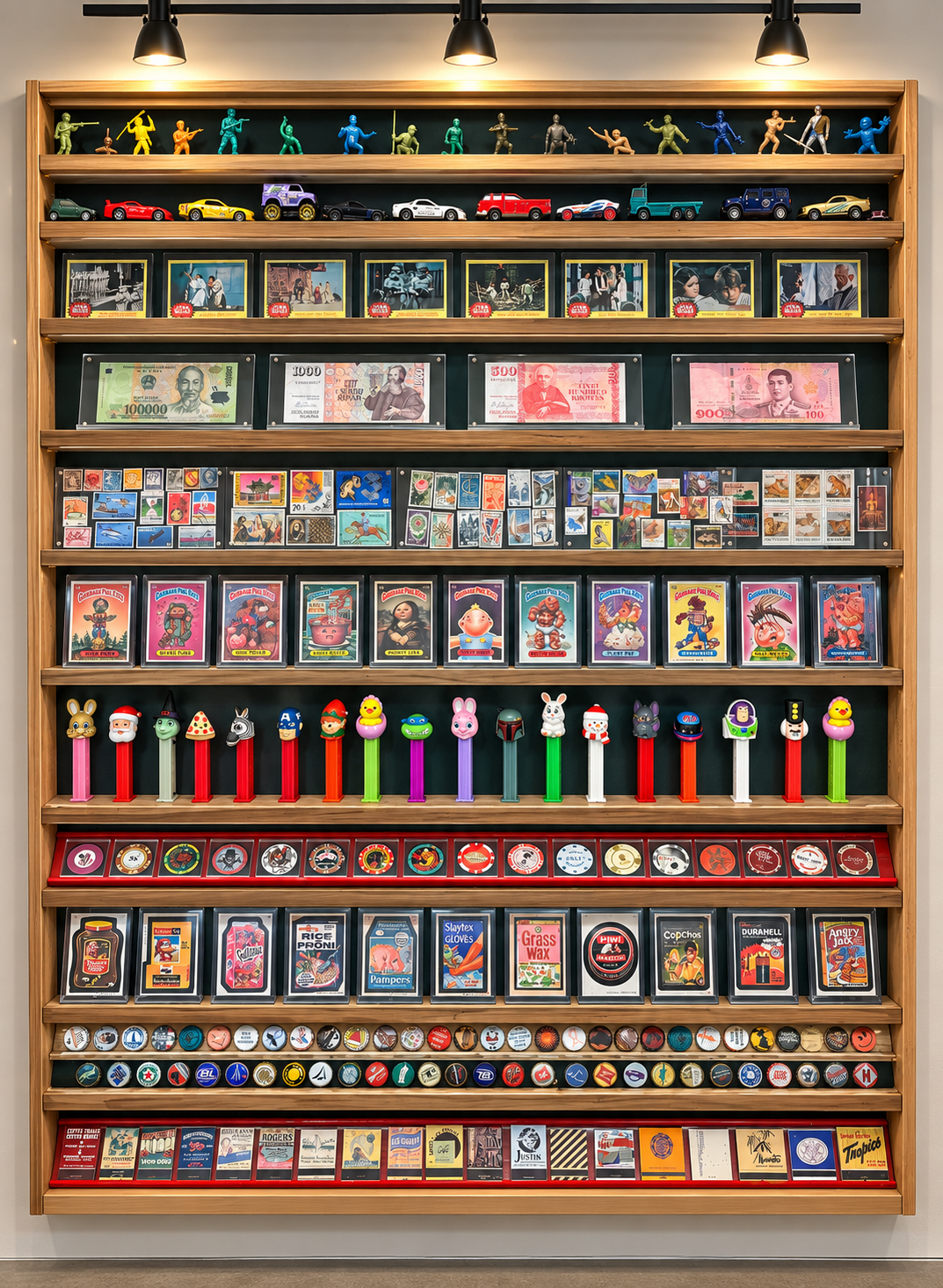
This collection celebrates the colorful world of American pop culture through the everyday objects that have become icons of nostalgia and design. Featuring trading cards, vintage stamps, PEZ dispensers, beer bottle caps, matchbooks, comic stamps, toys, and advertising collectibles, each piece reflects a unique chapter in the story of American life. From comic book characters and movie memorabilia to classic brands and roadside Americana, these artifacts showcase the creativity, humor, and graphic artistry that have shaped generations.
Together they form a vibrant time capsule of popular culture—where ordinary objects become extraordinary reminders of the people, products, and moments that defined their era.
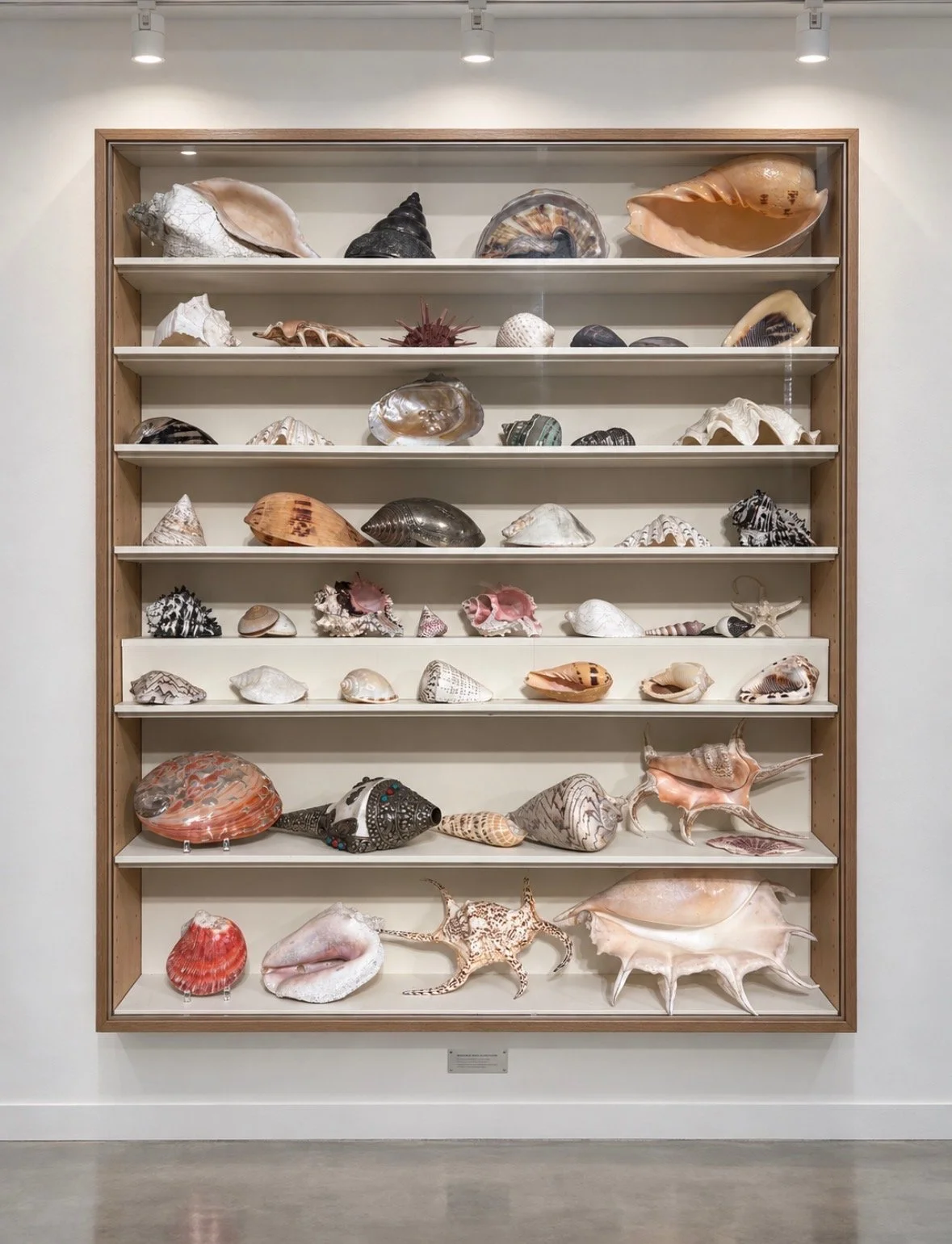
Shells have clothed kings, carried money, been made into tools and weapons, sounded ceremonial and battle calls, fastened clothing, decorated jewelry and shoes, produced rare pearls, and even created one of history’s most valuable colors. Long before shells became souvenirs, they were used as currency, technology, medicine, building material, status symbols, and works of art. A seashell may look like a quiet souvenir, but its story can be anything but quiet.
Some shells are beautiful because of their color or shape. Others are remarkable because of what the living animal could actually do.
Cone snails are predators armed with a hollow, harpoon-like tooth. They fire it into prey and inject venom; some fish-eating cone species can be dangerous to humans. Cone snails also occupy an enormous depth range: many live in very shallow reef water, while some species have been recorded down to roughly 1,000 meters (3,300 feet). The textile cone can reach about 6 inches long.
The elaborate murex shells have a completely different claim to fame. Certain murex snails supplied the secretions used to create Tyrian purple, one of the ancient world’s most prized dyes. Producing even a small amount required huge numbers of snails, helping make purple a symbol of wealth and royalty.
The shell world gets much bigger still. The giant Australian whelk, Syrinx aruana, produces the largest known snail shell, reaching about 70 cm — nearly 28 inches — and living from intertidal water down to around 50 meters (164 feet).
Cowries are among the most historically important shells in the world. One species, the money cowrie, was used as actual currency and a measure of wealth across parts of Africa, Asia, and the Indian Ocean region for centuries. The same species also occurs in Hawaiian waters, giving this small glossy shell a remarkable story that stretches from tropical reefs to ancient marketplaces.
Pearls are created by shell-making animals. Oysters, mussels, clams, and even conchs can produce pearls, although not all pearls are the same. Classic oyster pearls are usually made of nacre, while conch pearls are non-nacreous and are prized for their pink color and distinctive flame-like pattern. In a way, a pearl is the mollusk using the same basic mineral-building machinery it uses to make and repair its shell—only forming a gem inside the animal instead.
There is also a darker freshwater story. Certain freshwater snails act as intermediate hosts for the parasites that cause schistosomiasis. The snails themselves do not attack people; instead, parasite larvae released into contaminated freshwater penetrate human skin. The World Health Organization currently estimates about 14,353 deaths worldwide each year from schistosomiasis, while noting that the real number is probably higher.
My favorite and perhaps the king shells, even though the king conch’s are actually poisonous, is the large pink-lipped queen conch. It has another remarkable secret. It inhabits Caribbean and western Atlantic shallows, commonly in water less than about 100 feet deep, and can grow to roughly 12 inches long and live for decades. As previously mentioned yet very rarely, maybe one out of every ten thousand create a gem conch pearl. — natural, non-nacreous pearls that form inside the animal and can display beautiful pink, peach, cream, or white coloring, sometimes with a distinctive flame-like pattern. Because they are uncommon and cannot be cultured in the same way as traditional oyster pearls, fine conch pearls are highly prized by collectors and jewelers. The Queen conch is unique as one shell can represent food, music, Caribbean culture, natural history, and one of the rarer gems produced by a mollusk. “At one point, I owned one of the largest documented conch pearls in the world — a specimen weighing roughly 125 carats — before eventually selling it to a guy who actually flew me into New York to make the offer”.
“Even discarded shells have value. Because they are rich in calcium carbonate, shells have been burned and ground into powders for centuries—used in traditional medicine, lime, building materials, soil treatments, and modern industrial products.”
But these, well, they are now just: shelve-fish!
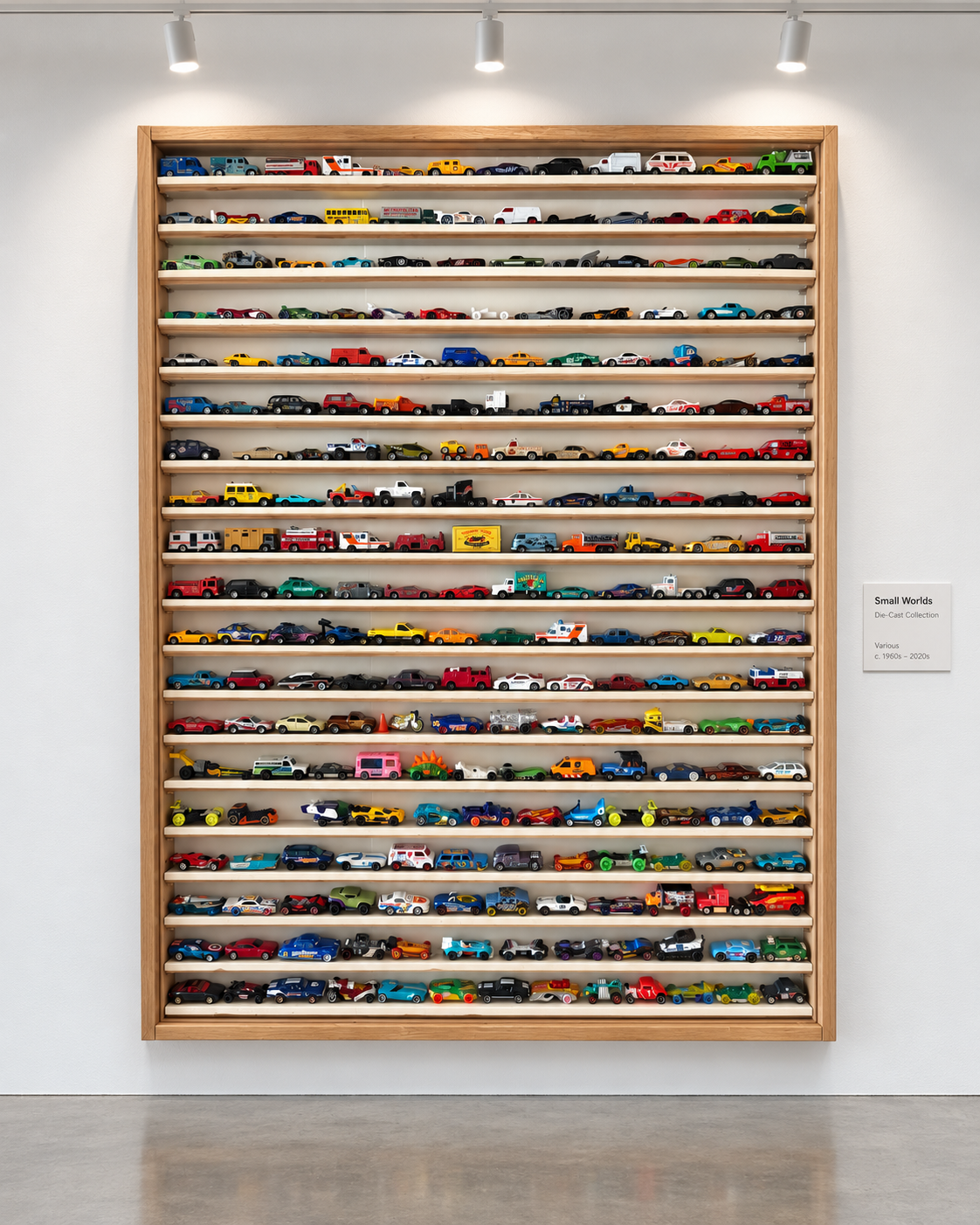
For generations, die-cast vehicles have captured the imagination of children and collectors alike, transforming everyday automobiles into miniature works of art. Matchbox introduced realistic cars and working vehicles inspired by the world around us, while Hot Wheels reimagined the automobile with bold colors, imaginative designs, and gravity-defying performance. Over the decades, these tiny replicas expanded to include everything from classic muscle cars and emergency vehicles to construction equipment, race cars, fantasy creations, and iconic trucks.
Together, this collection celebrates the history of die-cast vehicles and the creativity behind them—showcasing the machines that have fueled play, sparked nostalgia, and inspired generations of automotive enthusiasts.
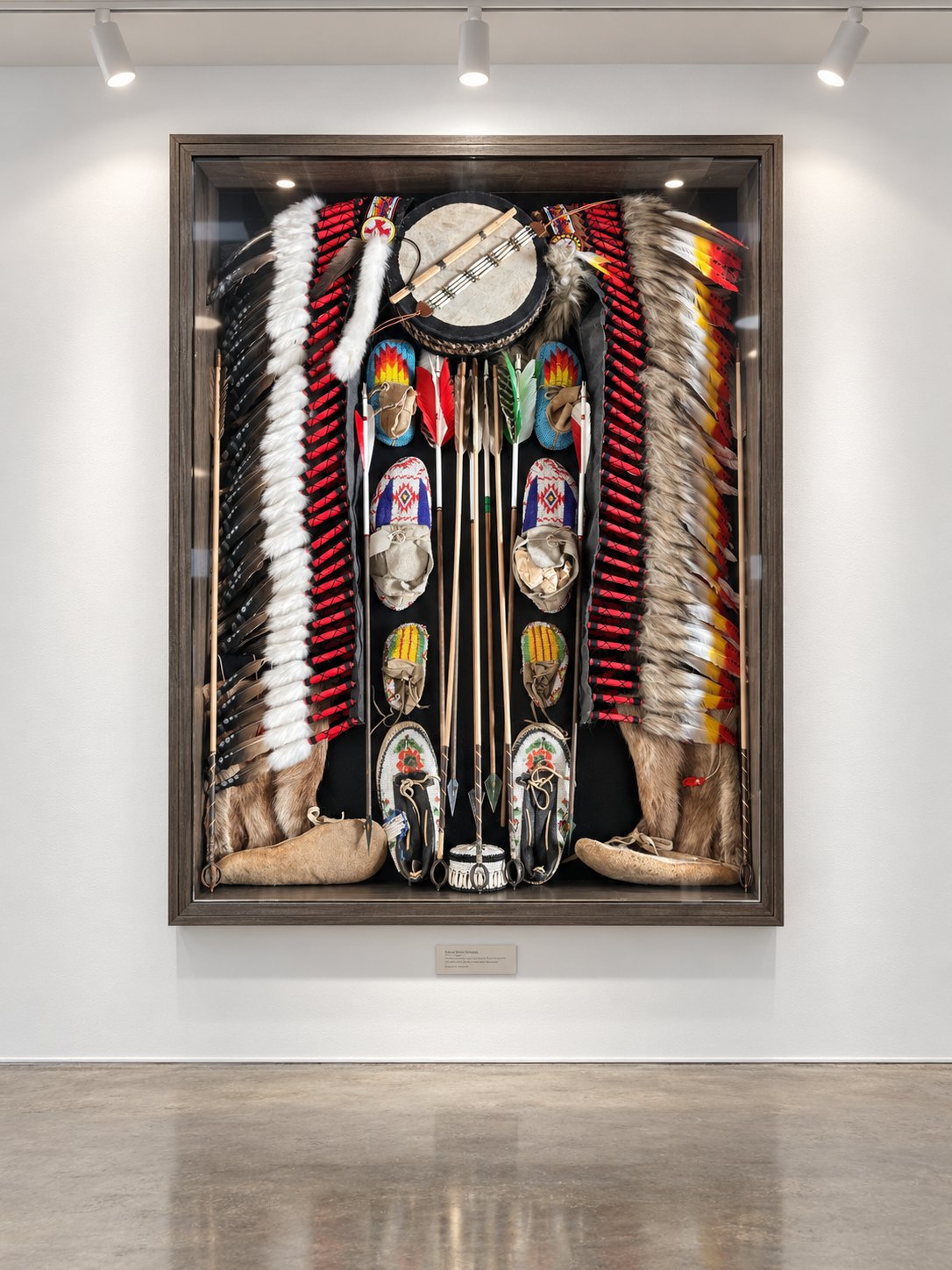
This collection honors the artistry, traditions, and craftsmanship of Indigenous cultures from North America and beyond. Featuring headdresses, authentic moccasins from several tribes—including a rare pair of Sioux moccasins dating to the 1930s—along with a handcrafted drum, arrowheads, and ceremonial items, each piece reflects a rich cultural heritage and a deep connection to the natural world. The collection also includes unique arrows from Nepal designed to carry fire, illustrating how traditional tools and weapons evolved across different cultures.
Together, these artifacts tell stories of survival, ceremony, artistry, and identity, preserving the legacy of skilled makers whose traditions continue to inspire and endure today.
*Cultural Respect & Context
These items represent the artistry, craftsmanship, and cultural traditions of Indigenous communities. Swag Box Art aims to present these objects respectfully, with historical context and appreciation for the cultures and makers connected to them.
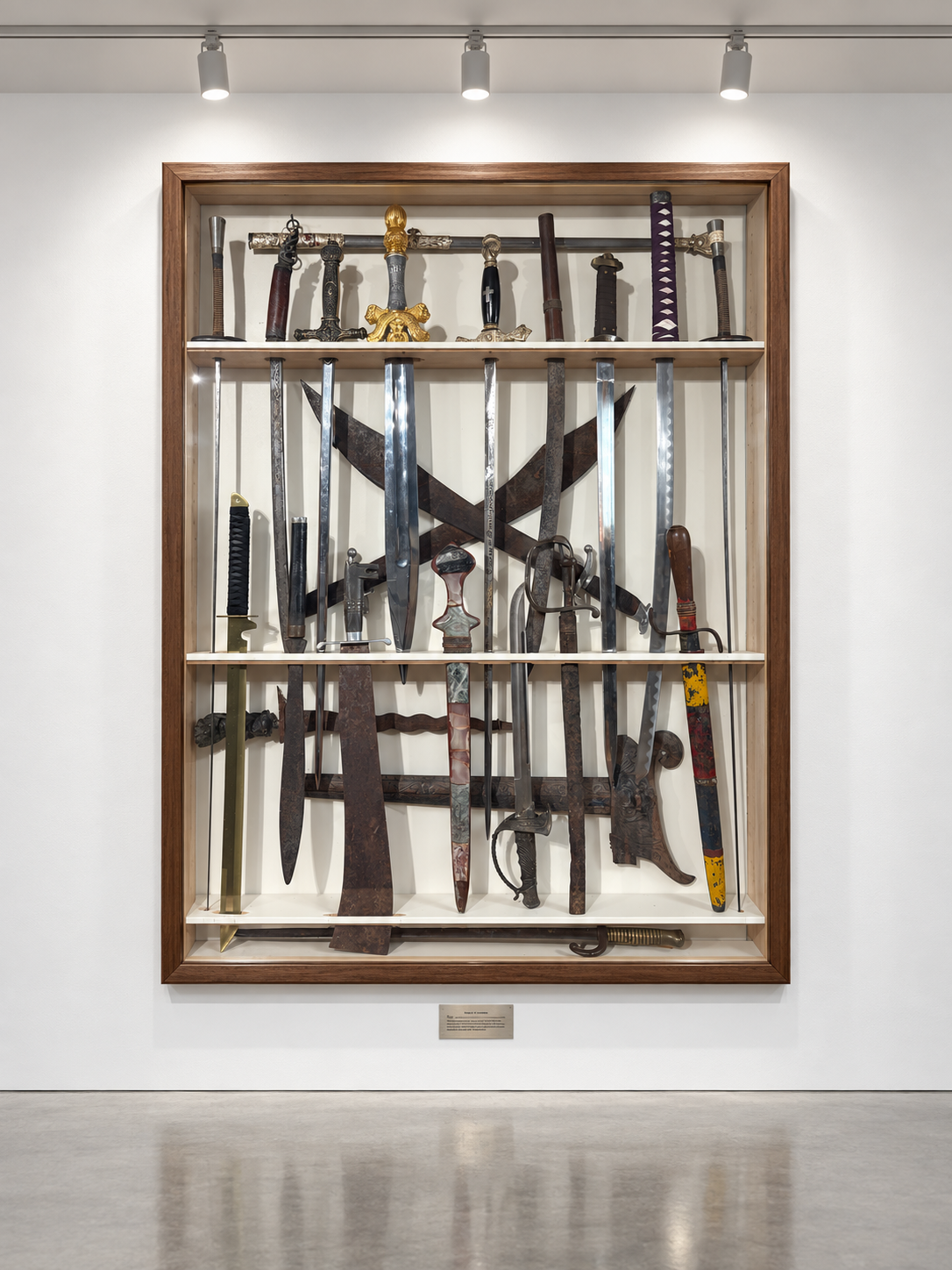
Being a pirate at heart, I’m a big fan of cutlasses, but there are so many varieties of swords, and for good reason.
Who Carried What?
Swords were shaped by the people who used them. Pirates and sailors favored short, heavy cutlasses that were easier to swing on crowded decks. Cavalry soldiers carried curved sabers designed for slashing from horseback. European knights used broadswords and longswords for armored combat, while duelists and gentlemen later carried slimmer rapiers and smallswords. In Japan, samurai wore the katana, often paired with a shorter wakizashi. Naval officers and military commanders continued wearing swords long after firearms took over the battlefield, turning the sword from an everyday weapon into a symbol of rank, honor, and authority.
This is my most original and unique collection as I started building this assemblage while sailing around the world on a semester at sea. As we literally circumnavigated the planet, I seemed to find a sword in every country or port of call: a samurai sword in Japan, a cross in Malaysia, a be-header in India. But the prize of this particular collection came from an antiquity store in Jerusalem, where I bought an ancient Roman sword also displayed in this case.
What would Hollywood have done without the sword? The Great duel between Wesley and Inigo Montoya in The Princess Bride, Excalibur, King Arthur, Zorro, Star Wars, Gladiator, Kill Bill, The Three Musketeers, Conan, Robin Hood, and let’s not forget Pirates of the Caribbean! Swords have remained one of cinema’s favorite symbols of heroism, revenge, honor, and adventure. Even the lightsaber is really a futuristic sword—the ancient weapon reinvented for another galaxy.
For thousands of years, the sword was one of the clearest symbols of power. Before firearms dominated battlefields, a sword could be a soldier’s weapon, a nobleman’s badge of rank, a ceremonial object, and a work of art all at once. The earliest swords were cast in bronze, but the shift to iron and then steel changed everything. Steel could be made harder, sharper, and more resilient, allowing blades to become thinner, longer, and more sophisticated.
Different cultures solved the same problem in different ways. European swords often emphasized straight, double-edged blades designed for cutting and thrusting. Middle Eastern blades became famous for curved forms such as the shamshir, optimized for slashing from horseback. In Japan, the samurai sword — especially the katana — became one of the most celebrated examples of blade craftsmanship in history.
Japanese swordsmiths worked with tamahagane, a traditional steel made from iron sand, and repeatedly refined and forge-welded the metal to control carbon content and remove impurities. The blade was then differentially hardened, creating a very hard cutting edge and a tougher spine. That process produced the visible temper line known as the hamon. A fine katana was not merely a weapon; it could be an heirloom, a spiritual object, and a sign of samurai identity.
European blades had their own advanced metallurgy. Medieval smiths used techniques such as pattern welding, combining different iron and steel bars to create both strength and distinctive surface patterns. Later, high-quality crucible steels from India and the Middle East became associated with the legendary look and performance of Damascus steel.
Before dependable firearms, swords remained important because they were reusable, portable, relatively quick, and effective in close combat. Even after guns appeared, early firearms were slow to load, inaccurate, and unreliable, so soldiers still carried swords, sabers, cutlasses, and bayonets for centuries.
Swords also became highly specialized. Rapiers emphasized thrusting and civilian dueling. Sabers were curved for cavalry. Cutlasses were short and heavy for fighting aboard ships. Claymores and other large two-handed swords sacrificed speed for reach and power. Small swords became fashionable status symbols. Naval officers, cavalrymen, and military commanders continued wearing swords long after guns had taken over most combat.
And the sword’s symbolic life may be even bigger than its military life. Swords appear in coronations, religious ceremonies, coats of arms, military dress, mythology, and literature. They represent justice, authority, courage, sacrifice, and honor.
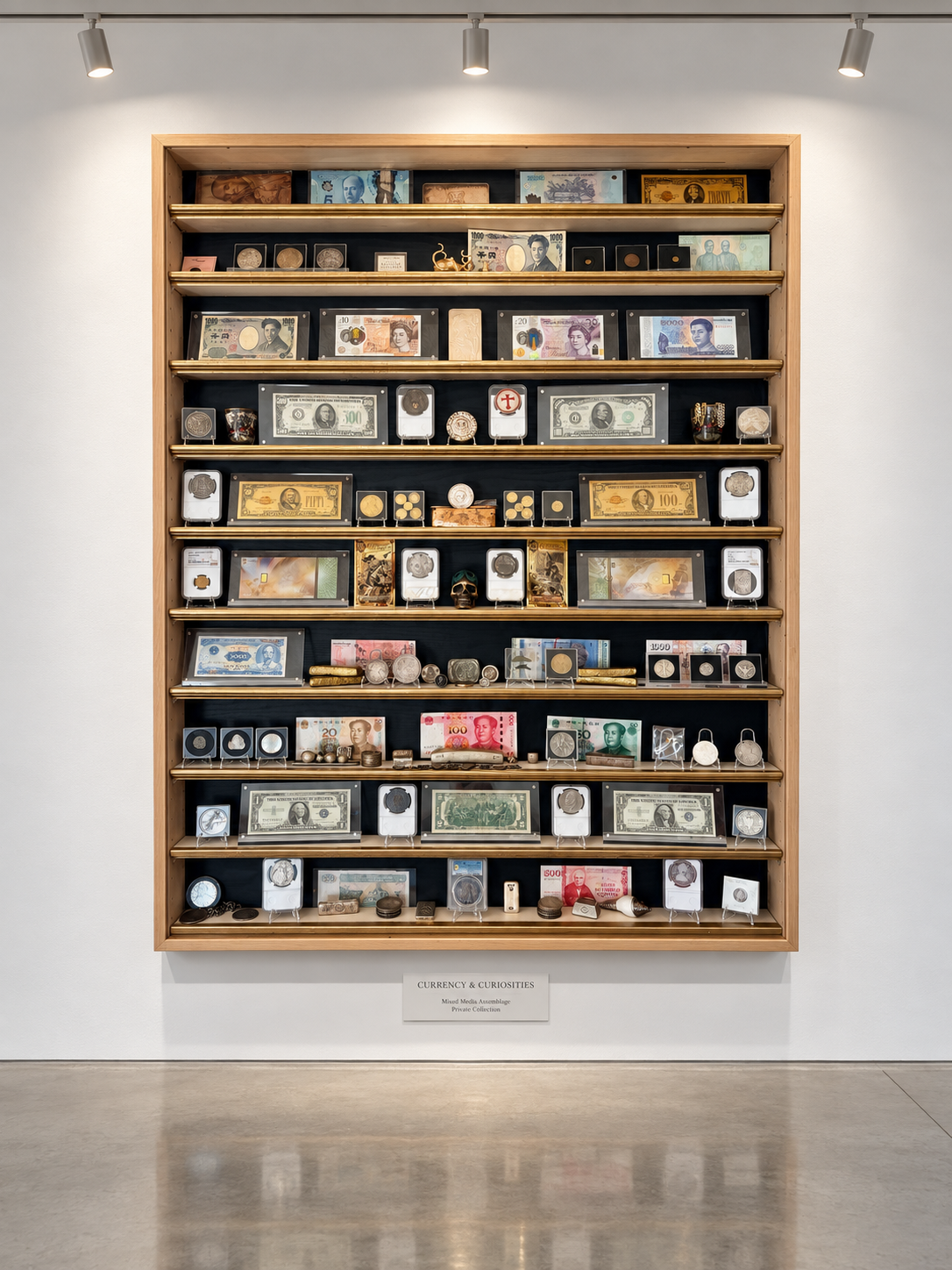
Money has been made from almost everything imaginable. Before coins and paper, people traded shells, beads, furs, crops, tools, livestock, and other useful goods. Cowrie shells became one of the most widespread forms of shell money because they were durable, portable, difficult to fake, and naturally attractive. They circulated across parts of Africa, Asia, Oceania, and even North America.
Then we decided shells were too easy to carry and invented giant stone money. On the island of Yap, enormous circular rai stones could weigh hundreds of pounds or be as large as a car. Some were so heavy they never physically moved when ownership changed — everyone simply agreed who owned the rock. In other words, people were doing “digital banking” centuries before computers; the database was our memory, fortunately before Alzheimer’s took over.
Gold and silver changed everything.
Early coins appeared around the sixth or seventh century BCE in places including China and Lydia. Lydian coins were made from electrum, a naturally occurring mixture of gold and silver. Unlike a cowrie or a cow, a standardized piece of precious metal could carry a large amount of value in your pocket without needing to be fed.
Gold became prized because it is scarce, beautiful, workable, and remarkably resistant to corrosion. Silver was more abundant and became the everyday monetary workhorse for centuries.
While my pirate-era coins are fascinating to me, the more remarkable coins are the early Greek/roman staters representing the very first Olympic Games. One is displayed here that’s over 2500 years old- imagine the story this one coin could tell.
Today we manufacture billions of coins and medals mechanically; an ancient Greek coin was individually struck with a hammer.
Ancient Greek cities often placed gods, athletes, horses, wreaths, stadium imagery, or local symbols on their coins. Coins associated with Olympia are especially fascinating because the ancient Olympic Games were not just athletic contests—they were religious festivals held in honor of Zeus. Victors competed for prestige rather than cash prizes, and the famous olive wreath became a symbol of honor.
Greek Olympic coinage also shows how sophisticated ancient minting had become. These coins were struck by hand between engraved dies, so no two impressions are exactly alike. A slightly off-center image, uneven edge, or strong strike can actually be part of the coin’s character rather than a flaw.
But ohhh “the Spanish silver eight reales, and gold doubloons”— or the famous “piece of eight.” Spanish dollars circulated throughout the Americas and Caribbean and were familiar money in colonial America long before the United States had its own national coinage. They could even be physically cut into pieces to make change — hence the expression “two bits” for a quarter of a dollar.
Pirate money wasn’t entirely Hollywood.
Those “pieces of eight” really were the international money of the maritime world. Silver mined in the Americas traveled aboard treasure fleets to Europe and across the Pacific to Asia. When one of those ships sank, the coins could remain underwater for centuries.
That’s what makes a genuine shipwreck coin so compelling: the coin itself traveled through the economic system that built empires, financed wars, paid sailors, bought cargo — and occasionally ended up on the bottom of the ocean.
Paper money isn’t really paper.
American dollar bill is 75% cotton and 25% linen. It contains tiny colored security fibers and, on denominations of $5 and higher, embedded security features such as threads and watermarks.

Your collection deserves a display made with care. At Swag Box Art, each custom-built case is made by a lifelong collector who understands what it takes to showcase the pieces you’re proud of. We bring a collector’s eye and hands-on experience to every build, creating a display that feels right for your project and your space.
Custom display cases starting at $299. Tell us what you’d like to display, and we’ll help you plan a case around it.
Before Google, Yelp, Instagram, and QR codes, there was the matchbook.
For much of the 20th century, almost every hotel, restaurant, nightclub, casino, bar, bowling alley, airline, political campaign, and roadside attraction seemed to have one. They were cheap to make, easy to carry, and brilliantly effective advertising. A customer could walk out of a restaurant with the address, phone number, logo, and sometimes even a map tucked into their pocket.
At their peak, matchbooks were miniature works of commercial art. Designers squeezed typography, cartoons, photographs, slogans, menus, maps, and sales pitches onto a piece of cardboard only a couple of inches wide. Some even carried jokes, dating advice, contests, political messages, or instructions on how to order something by mail.
Then something interesting happened: smoking declined, disposable lighters took over, and matchbooks quietly began disappearing from everyday life. What had once been throwaway advertising became collectible history.
This collection preserves hundreds of those tiny time capsules—restaurants that vanished, hotels that changed names, casinos that were demolished, businesses that survived, and graphics that instantly reveal the decade they came from.
One of the most unusual pieces is the oversized “World’s Largest Match Book”—a wonderfully excessive version of an object that was designed to be small enough to disappear into your pocket.
And perhaps that is what makes matchbooks so fascinating: they were never meant to survive. They were designed to be opened, struck, burned, used up, and thrown away.
Yet here they are.
Fun fact: Collecting match-related material is called phillumeny, from words associated with “light” and “love.” A collector of matchbooks is therefore preserving something that was literally created to disappear in a flash.